





Top B2B SEO Tools For 2026 [Reviewed & Ranked]


Jul 27, 2026

Contents
 20 min


B2B SaaS SEO returns an average 702% ROI with a seven-month break-even, and organic search now drives 44.6% of all B2B revenue, more than any other digital channel, according to SEO Sherpa. This could differ on the basis of what businesses one is operating in.
That's the real difference SEO tooling makes: it turns a slow, manual channel into a measurable, compounding one.
As AI answer engines reshape discovery, 92% of marketers plan to hold or grow their SEO budget in 2026, per HubSpot's State of Marketing report.
For SaaS teams, the tools that matter most now do three jobs at once—keyword and intent research, technical crawlability, and content optimization that also earns citations in ChatGPT, Perplexity, and Google AI Overviews.
Below are 15 tools worth shortlisting in 2026, grouped by job-to-be-done.
| S.N. | Tool | Best For | Best Feature | B2B Fit Rating |
|---|---|---|---|---|
| 1 | Ahrefs | Keyword & backlink depth | Site Explorer backlink index | 4.5/5 (G2) |
| 2 | SE Ranking | Suite breadth at low cost | White-label reporting | 4.8/5 (G2) |
| 3 | Profound | AI search visibility tracking | Prompt Volumes data | 4.6/5 (G2) |
| 4 | Ubersuggest | Budget entry point | AI Model Insights at every tier | Excellent (Trustpilot) |
| 5 | Screaming Frog | Technical crawl audits | 300+ issue detection per crawl | 4.7/5 (G2) |
| 6 | AccuRanker | Fast, accurate rank tracking | AccuLLM prompt tracking | 4.8/5 (G2) |
| 7 | MarketMuse | Topical authority planning | Personalized difficulty scoring | 4.6/5 (G2) |
| 8 | Clearscope | Editorial content scoring | NLP term recommendations | 4.9/5 (G2) |
| 9 | Conductor | Enterprise SEO/AEO governance | 24/7 site monitoring | 4.5/5 (G2) |
| 10 | SEOBoost | Budget content optimization | Topic Reports (24 metrics) | Not widely published |
| 11 | Slate | AI visibility + content execution | Power Sheets bulk refresh | 4.9/5 (G2) |
| 12 | Google Search Console | First-party query/click data | Index coverage reporting | Free, ubiquitous |
| 13 | Google Analytics 4 | Pipeline and conversion attribution | Event-based cross-channel tracking | Free, ubiquitous |
| 14 | Respona | Managed link placements | Guaranteed live placement | 4.8/5 (G2) |
| 15 | Metaflow | Agentic SEO + paid + outbound | One-system GTM automation | Trial-first, no aggregate score yet |
A. Keyword & Intent Research
The tools below reveal what buyers are actually searching for and how much of that demand is worth pursuing.
1. Ahrefs
Ahrefs is a research-first SEO platform built around one of the deepest backlink indexes in the industry. Its core strength is speed: keyword, competitor, and link data return quickly enough to run research live during a client call.
-
Keywords Explorer pulls data from 10 search engines, not just Google
-
Site Explorer maps a domain's full backlink and organic keyword profile
-
Brand Radar tracks brand mentions and citations across AI engines
Ahrefs works for SaaS teams that need keyword and backlink depth before they touch content. It's the tool most B2B SEO leads reach for first when scoping a new domain or auditing a competitor's link profile.
We have been using Ahrefs, which typically anchors the research phase of a client engagement, competitor keyword gaps, backlink audits, and content-cluster planning before a single brief gets written.
Key features: Keywords Explorer, Site Explorer, Site Audit, Rank Tracker, Brand Radar
Best for: Research-heavy SaaS teams prioritizing keyword and backlink depth
Pricing:
-
Starter $29/mo,
-
Lite: $129/mo.
-
Standard $249/mo,
-
Advanced $449/mo,
-
Enterprise $1,499/mo
To learn more, see pricing
Compliance: SOC 2 Type II, ISO 27001, GDPR compliant
Deployment: Cloud SaaS, with a browser extension and desktop toolbar
Advantages
-
Deepest backlink index in the category
-
Fast, reliable keyword research workflows
-
Strong API and MCP support for automation
Disadvantages
-
Limited content workflow and publishing tools
-
AI citation tracking is less mature than dedicated GEO platforms
-
Advanced/Enterprise tiers get expensive fast
2. SE Ranking
SE Ranking delivers Semrush-level breadth—keyword research, rank tracking, audits, and backlinks, at roughly a third of the price. It's built for agencies that need white-label reporting without white-label budgets.
-
AI visibility tracking across major AI search platforms
-
White-label reports and multi-client project management
-
Rank tracking with historical data and API access on higher tiers
SaaS marketing teams and agencies managing several client domains get the most value here, since project-based pricing scales cleanly across a growing client roster.
For agency clients specifically, SE Ranking's white-label layer allows Saffron Edge to provide branded reporting without creating a separate dashboard from scratch.
Key features: Keyword research, competitor and backlink analysis, rank tracking, on-page audits, white-label reporting
Best for: Mid-market SaaS teams and agencies wanting suite breadth at lower cost
Pricing:
-
Core $103.20/mo,
-
Growth: $223/mo.
They also provide Enterprise custom
To learn more, see pricing
Compliance: GDPR compliant; specific certifications not publicly detailed—confirm SOC 2 status directly with the vendor for enterprise deals
Deployment: Cloud SaaS
Advantages
-
Strong value relative to Semrush and Ahrefs
-
Agency-friendly white-label reporting
-
Growing AI Overview and AI visibility tracking
Disadvantages
-
Thinner enterprise governance than Conductor or Semrush
-
AI tools and local features often sit behind paid add-ons
-
Feature depth still trails category leaders on backlink data
3. Profound
Profound is the category leader in AI search visibility, tracking how often and how favorably a brand shows up across ChatGPT, Perplexity, Gemini, Google AI Overviews, and more. It's built for teams that already have SEO analysts and writers who can act on the data.
-
Prompt Volumes: proprietary data estimating real conversation volume on LLMs
-
Tracks up to 10 AI models on the Enterprise plan
-
AI agents that assist with prompt-targeted content generation
Profound suits Series B+ SaaS companies and enterprises with a dedicated GEO program and a team ready to turn visibility data into content changes.
We would typically bring Profound in once a client's core SEO is stable and the priority shifts specifically to AI-engine citation share.
Key features: AI Search Analytics, Prompt Volumes, competitive benchmarking, Agent Analytics
Best for: Enterprise teams with existing SEO resources who need AI visibility depth
Pricing:
-
Starter from $99/mo (ChatGPT only);
-
Growth and Enterprise are custom-quoted
To learn more, see pricing
Compliance: SOC 2 Type II
Deployment: Cloud SaaS
Advantages
-
Deepest AI engine coverage in the category
-
Real prompt-volume data, not just estimates
-
Clears enterprise procurement and security review
Disadvantages
-
Pricing has shifted toward custom/enterprise quotes
-
User reviews cite dashboard confusion and reliability bugs
-
Surfaces gaps but doesn't fix them—needs an execution layer alongside it
4. Ubersuggest
Ubersuggest is the budget entry point into SEO and AEO tooling, trusted by over 250,000 users from solo operators to enterprise teams. Every tier—even the cheapest—includes AI Model Insights across ChatGPT, Gemini, and Google AI Overview.
-
Keyword research with up to 100,000 suggestions per month on top tier
-
Rank tracking across up to 300 tracked keywords per project
-
Site audits crawling up to 10,000 pages weekly
It's a reasonable fit for early-stage SaaS teams that need functional SEO tooling before committing to a heavier research suite.
For lean or early-stage clients, Saffron Edge sometimes recommends Ubersuggest as a starter tool before graduating them to Ahrefs or Semrush.
Key features: Keyword research, rank tracking, site audits, AI Model Insights, competitive analysis
Best for: Early-stage SaaS teams and solo marketers on a tight budget
Pricing:
-
Business: $49 /month
-
Individual: $29 /month
-
Enterprise: $99 /month
They also provide a 7-day free trial
To learn more, see pricing
Compliance: GDPR compliant; standard SaaS security
Deployment: Cloud SaaS with Chrome extension
Advantages
-
Lowest price point in the category
-
AI model visibility included even at the entry tier
-
Simple, low-learning-curve interface
Disadvantages
-
No API access for automated workflows
-
Keyword and backlink data shallower than Ahrefs or Semrush
-
Not built for enterprise-scale reporting
B. Technical SEO & Crawlability
These tools find and track the site-level issues like broken links, crawl errors, and ranking drift, that quietly cap every other SEO effort.
5. Screaming Frog SEO Spider
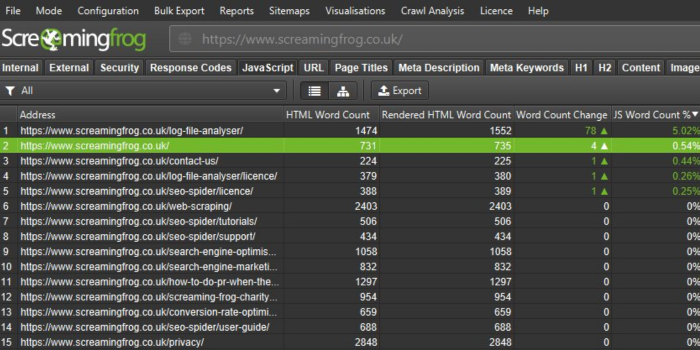
Screaming Frog SEO Spider is the industry-standard desktop crawler for technical SEO audits. It identifies over 300 site issues per crawl and remains the tool most SEO consultants reach for first on a new domain.
-
Broken link and redirect chain detection
-
Full JavaScript rendering support for modern SaaS sites
-
Command-line interface and API for CI/CD-integrated audits
It's built for anyone running first-time or recurring technical audits, from solo consultants to in-house technical SEO leads.
We use Screaming Frog as the default first pass on any new client site—before Semrush, Ahrefs, or content work even starts.
Key features: Full-site crawling, broken link and redirect detection, JS rendering, GSC/GA integration, scheduled crawls (paid tier)
Best for: Technical SEO audits and site migrations of any size
Pricing:
-
Free for up to 500 URLs
-
Its paid version is for $279 per year
To learn more, see pricing
Compliance: Desktop application—crawl data stays local by design; no third-party data exposure
Deployment: Desktop (Windows, macOS, Linux), with cloud scheduling on the paid license
Advantages
-
Unmatched crawl depth for the price
-
Industry-standard integrations with GSC and GA
-
The free tier is genuinely usable for smaller sites
Disadvantages
-
Desktop-only — large crawls tie up local machine resources
-
Dated interface with a real learning curve for beginners
-
No native content or workflow tools
6. AccuRanker
AccuRanker is built for one job—rank tracking—and does it faster and more accurately than any all-in-one suite. AccuLLM extends that same speed to AI-engine visibility tracking.
-
Real-time SERP rank tracking, refreshed daily as standard
-
AccuLLM tracks brand visibility across ChatGPT, Perplexity, AI Mode, and AI overviews.
-
Unlimited users and domains on every tier
It fits agencies and enterprise teams tracking thousands of keywords across multiple client domains, where tracking speed and accuracy directly affect reporting credibility.
We pair AccuRanker with Ahrefs for larger accounts, specifically when clients need daily rank movement data that Ahrefs' weekly refresh cannot provide.
Key features: Real-time rank tracking, SERP feature tracking, AccuLLM prompt tracking, unlimited API access
Best for: Agencies and enterprises tracking large keyword sets across many domains
Pricing:
-
Professional from $224 to $249/mo
-
Expert: $764 / month
Contact for enterprise pricing
To learn more, see pricing
Compliance: GDPR compliant; EU-based data residency by default
Deployment: Cloud SaaS
Advantages
-
Fastest, most accurate rank refresh in the category
-
Unlimited users and domains on every plan
-
AccuLLM adds AI visibility without a separate vendor
Disadvantages
-
Higher price floor than budget trackers like SE Ranking
-
Rank tracking only — no backlink or content tools
-
Billing and cancellation friction flagged repeatedly on Trustpilot
C. Content Optimization for Rankings + AI Citations (GEO/AEO)
This group covers the tools that turn a brief into a page built to rank in Google and get cited in ChatGPT, Perplexity, and AI Overviews.
7. MarketMuse
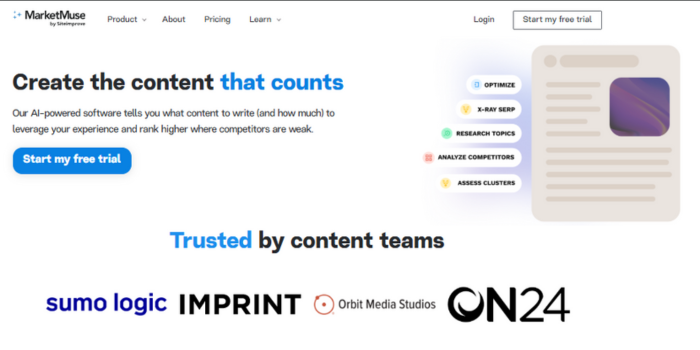
MarketMuse is a planning tool built around topic models rather than keyword lists. It's designed for teams building topical authority methodically, not chasing individual keywords.
-
Personalized difficulty scoring based on a domain's existing content
-
Competitor content-gap discovery at the topic level
-
Site-level content inventory and prioritization
It fits SaaS content teams planning multi-quarter topic clusters, where the strategic mapping matters more than rapid execution.
Saffron Edge uses MarketMuse mainly at the planning stage — mapping a client's topic clusters before briefs get written in a faster execution tool.
Key features: Topic authority scoring, content gap analysis, briefs, content inventory
Best for: SaaS content teams planning topic clusters and authority plays
Pricing: They have 4 plans -
-
Free plan
-
Optimize
-
Research
-
Strategy
All of them are quote- and requirement-based, so to learn more, see pricing
Compliance: Standard SaaS security; specific certifications not publicly detailed
Deployment: Cloud SaaS
Advantages
-
Strongest strategic planning depth in the category
-
Free plan available for evaluation
-
Useful for mapping cluster coverage at scale
Disadvantages
-
Steeper learning curve than scoring-first tools
-
Quote-based pricing complicates budgeting
-
Weaker fit for teams wanting fast execution over planning depth
8. Clearscope
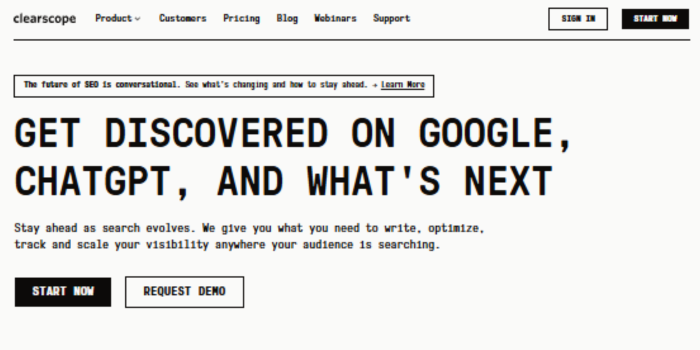
Clearscope is an editor-friendly tool for optimizing content that writers tend to like on first use. It scores drafts against live SERP data and tracks brand visibility across Google, ChatGPT, and Gemini.
-
NLP-driven term recommendations inside a clean content editor
-
Topic discovery with search-intent analysis
-
Prompt and brand visibility tracking layered onto the same workflow
It fits editorial teams optimizing high-value SaaS pages—pricing, comparison, and cornerstone content—where content quality is non-negotiable.
Clearscope is used by our writers directly during the drafting stage, since its scoring interface needs almost no onboarding.
Key features: Content grading, term recommendations, topic discovery, prompt/brand visibility tracking
Best for: Editorial teams optimizing high-value SaaS pages with strict quality standards
Pricing:
-
Essentials: $129/mo.
-
Business $399/mo,
The enterprise package is custom-made based on your requirements.
To learn more, see pricing
Compliance: Standard SaaS security; specific certifications not publicly detailed
Deployment: Cloud SaaS, with Google Docs and WordPress integrations
Advantages
-
Cleanest, most opinionated editor UX in the category
-
Strong content-quality signal for editorial teams
-
Visibility tracking built into the same optimization workflow
Disadvantages
-
Higher cost per report than budget optimizers
-
Limited technical SEO functionality
-
Not a full suite — needs pairing with a research tool
9. Conductor
Conductor is the enterprise AEO and SEO governance platform, built for organizations that need formal reporting, multi-stakeholder approval flows, and round-the-clock monitoring. It also serves as Saffron Edge's pick for reporting and stakeholder visibility—see the comparison table above.
-
AI visibility and AEO/SEO performance tracking in one dashboard
-
24/7 website monitoring and alerting
-
Enterprise-scale page analysis and keyword tracking
It's built for enterprise marketing and SEO teams that need to prove ROI to boards, legal, and cross-functional stakeholders, not just to a marketing lead.
Saffron Edge recommends Conductor specifically when a client's internal reporting requirements—board decks and multi-team sign-off—outgrow what a standard SEO dashboard can produce.
Key features: AI visibility tracking, 24/7 monitoring, AI content generation, enterprise page analysis
Best for: Enterprise marketing and SEO teams with formal governance and stakeholder reporting needs
Pricing:
-
You can try essentials for free.
-
Request a demo for growth.
-
Contact sales for enterprise tiers,
To learn more, see pricing
Compliance: Enterprise-grade governance controls: confirm current SOC 2/ISO certification status directly with the vendor before procurement
Deployment: Cloud SaaS
Advantages
-
Tightest integration of monitoring, content, and visibility for large orgs
-
Mature implementation and onboarding support
-
Built for cross-team, board-level reporting
Disadvantages
-
Quote-based pricing complicates budgeting
-
Heavier than SMB or early-stage teams need
-
Longer implementation timeline than self-serve tools
10. SEOBoost
SEOBoost is a budget content-optimization tool built around fast Topic Reports and team workflow tracking. It targets the same job as Clearscope at a fraction of the price.
-
Topic Reports analyze the top 30 SERP competitors across 24 content metrics
-
Content editor with campaign, ranking, and deadline tracking in one view
-
14-day free trial with no long onboarding
It fits small SaaS teams and agencies that need functional content scoring without Clearscope- or MarketMuse-level spend.
We use SEOBoost as the lean alternative for smaller retainers where a full Clearscope subscription isn't justified by content volume.
Key features: Topic Reports, content editor, workflow tracking, content audit
Best for: Small SaaS teams and agencies needing budget content optimization
Pricing:
Essential: $30
Team: $49/mo
Agency: $100/mo
To learn more, see pricing
Compliance: Standard SaaS security; specific certifications not publicly detailed
Deployment: Cloud SaaS
Advantages
-
Lowest cost per seat in the content-optimization tier
-
Fast topic-report generation
-
Simple, editor-styled interface
Disadvantages
-
Shallower feature depth than Clearscope or MarketMuse
-
Limited technical SEO scope
-
Public review coverage is thinner than category leaders'.
11. Slate
Slate is a content engineering platform that closes the loop between AI search visibility data and actual content execution. It tracks AI Search Analytics and pushes fixes straight into publishing workflows.
-
AI Search Analytics across ChatGPT, Google AI Mode, Google AI Overviews, and Perplexity
-
Workflows: a visual builder for multi-step content automation with 24+ AI models
-
Power Sheets for bulk refreshes across thousands of URLs at once
It fits Series A-through-mid-market SaaS teams that already publish regularly and need to operationalize AI visibility, not just measure it.
We use Slate specifically for clients running large comparison or pricing-page libraries that need systematic, ongoing refreshes rather than one-off edits.
Key features: AI Search Analytics, Workflows automation, Power Sheets, Brand Kit governance, direct CMS publishing
Best for: B2B SaaS marketing teams operationalizing AI search visibility at scale
Pricing: They provide custom solutions for all of their plans.
-
Pro
-
Enterprise
-
Agency Lite
You can contact their sales department for all of them, to learn more and see pricing
Compliance: Standard SaaS security; specific certifications not publicly detailed
Deployment: Cloud SaaS with direct Webflow/WordPress publishing and MCP integration
Advantages
-
Closes the gap between AI visibility insight and content execution
-
Refresh workflows built specifically for SaaS page types
-
Brand governance controls prevent generic AI output at scale
Disadvantages
-
Not a keyword-research database on its own—pair with Ahrefs or Semrush
-
Heavier than solo bloggers or non-SaaS programs need
-
Newer entrant with a shorter track record than legacy suites
D. Analytics & Pipeline Attribution
These are the ground-truth measurement tools that connect organic traffic to real pipeline, not just rankings and sessions
12. Google Search Console
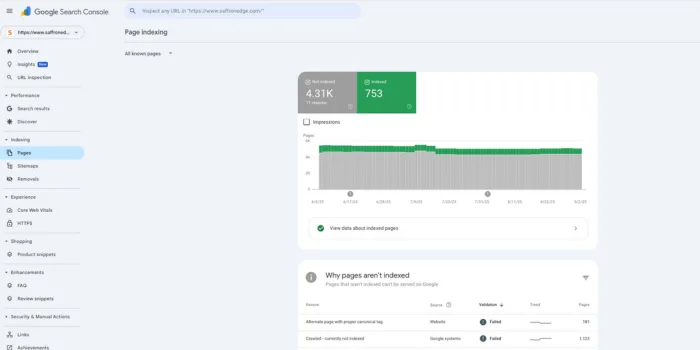
Google Search Console is the only tool on this list with first-party access to how Google actually indexes and ranks a site. Every other tool's estimates get validated against it.
-
Query and click performance data straight from Google's own index
-
Index coverage and crawl error reporting
-
Core Web Vitals and mobile usability reports
It's non-negotiable for every SaaS team, regardless of size, since it's the ground-truth source every paid tool ultimately references.
Saffron Edge connects GSC before using any other tool on a new engagement, it's the baseline every downstream recommendation gets checked against.
Key features: Query/click performance, index coverage, Core Web Vitals, sitemap submission, manual action alerts
Best for: Every SaaS team, as a baseline data source
Pricing: it is free; you just have to sign in with your mail.
Compliance: Covered under Google's standard compliance stack (ISO 27001, SOC 2, GDPR-aligned controls)
Deployment: Cloud, browser-based
Advantages
-
Free, first-party data no third-party tool can replicate
-
Direct signal for indexing and crawl errors
-
Foundation that validates every other tool's estimates
Disadvantages
-
No competitor data
-
Limited historical window (16 months)
-
Basic reporting and export options compared to paid platforms
13. Google Analytics 4
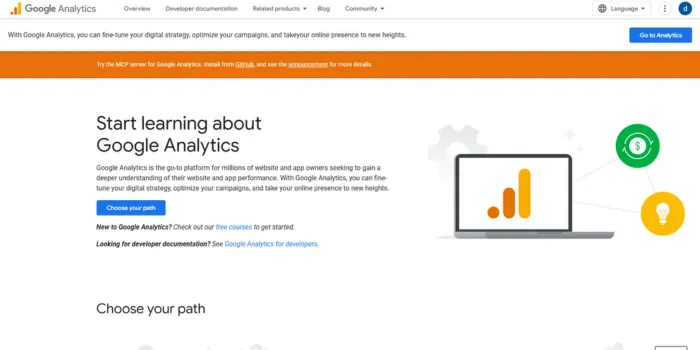
Google Analytics 4 is the standard, free, event-based analytics platform most SaaS teams have already installed. It's the layer that turns SEO traffic into pipeline data.
-
Event-based tracking across every channel, not just organic
-
BigQuery export for custom pipeline and revenue modeling
-
Audience building for retargeting and lifecycle segmentation
It's essential for any SaaS team trying to connect SEO traffic to trial signups, demo requests, or closed revenue.
We at Saffron Edge sets GA4 goals specifically around trial starts and demo requests, so SEO reporting ties back to the pipeline instead of stopping at traffic.
Key features: Event-based tracking, cross-channel attribution, BigQuery export, audience segmentation
Best for: Connecting organic traffic to pipeline and revenue outcomes
Pricing: It's free; GA4 360 (enterprise) is custom-quoted
To learn more, see pricing
Compliance: Covered under Google's standard compliance stack (ISO 27001, SOC 2, GDPR-aligned controls)
Deployment: Cloud, tag-based implementation
Advantages
-
Free and near-universal, so it integrates with everything
-
Deep native integration with Google Ads and Search Console
-
Flexible event modeling for custom pipeline stages
Disadvantages
-
Steeper learning curve than legacy Universal Analytics
-
Sampling and data thresholds apply on lower tiers
-
Needs a CRM layer to reach true revenue attribution
E. Reporting & Stakeholder Visibility
The final group covers tools built to prove SEO's impact to people outside the SEO team, leadership, clients, and cross-functional stakeholders.
14. Respona
Respona has moved from self-serve outreach software to a managed, pay-per-placement link-building service. Every placement is guaranteed to go live within the agreed turnaround, with content creation and outreach managed end-to-end.
-
Guaranteed live placements within a standard 28-day turnaround
-
Content creation and outreach handled by Respona's team, not the client
-
Bulk pricing discounts at higher monthly spend
It fits SaaS teams and agencies that want backlinks without building or managing an in-house outreach function.
We usually use Respona specifically when a client needs guaranteed placements on a deadline, rather than an open-ended outreach campaign.
Key features: Managed placement delivery, prospect discovery, AI personalization (legacy self-serve tiers), placement analytics
Best for: SaaS teams and agencies buying guaranteed backlinks at scale
Pricing:
-
Starter: $100/placement
-
Standard: $160/placement
-
Authority: $240/placement
-
Power: $400/placement
-
Elite: $500/placement
To lean more, see pricing
Compliance: Standard SaaS/service security; specific certifications not publicly detailed
Deployment: Managed service — cloud dashboard plus human execution
Advantages
-
Guaranteed live placements within a set timeframe
-
No in-house outreach headcount required
-
Strong G2 satisfaction score (4.8/5, 199 reviews)
Disadvantages
-
A pricing model shift may surprise buyers expecting self-serve software
-
Reliance on third-party tools like Ahrefs adds to total cost
-
Less control over live campaign editing than a self-serve platform
15. Metaflow
Metaflow is an agentic marketing platform that runs SEO, AEO, paid acquisition, and outbound from one connected system, aimed at fast-moving B2B SaaS GTM teams.
-
SEO and AEO content built for search rankings, AI Overviews, and LLM visibility
-
Performance marketing automation across Google Ads, Meta Ads, and LinkedIn
-
Signal-based outbound that routes qualified interest into the revenue process
It fits lean SaaS GTM teams that want SEO, paid, and outbound coordinated through one system instead of three separate tools and headcounts.
We usually use Metaflow to evaluate and consolidate SEO, paid, and outbound workflows under fewer vendors for our clients, when in process.
Key features: Agent workflows for SEO/AEO content, programmatic page generation, paid ad automation, signal-based outbound
Best for: B2B SaaS teams running SEO, AEO, paid acquisition, and outbound from one agentic system
Pricing:
-
14-day free trial, then $100/mo (Solo Growth)
-
$299/mo (Scale Pro)
To learn more, see pricing
Compliance: Standard SaaS security; specific certifications not publicly detailed
Deployment: Cloud SaaS
Advantages
-
Replaces multiple point tools (SEO, paid, outbound) in one system
-
Built for AI search visibility from the ground up, not retrofitted
-
Guardrails and QA loops keep agent output on-brand
Disadvantages
-
Newer entrant with a smaller public track record
-
More platform than teams needing a single-purpose SEO tool
-
No established aggregate review score yet
Why SaaS Businesses Need SEO Tools
SEO tools enable SaaS companies to convert search data into qualified traffic, pipeline, and revenue. They help with keyword research, technical audits, content optimization, competitor analysis, and performance measurement.
These tools are critical for B2B SaaS companies seeking to establish long-term visibility in complex and competitive search markets.
1. Improve Search Visibility
SaaS companies frequently compete across industries, regions, and usage scenarios. SEO tools find high-intent keywords, ranking gaps, and competitive opportunities.
This enables teams to create pages that reflect how buyers search for solutions, features, integrations, and alternatives.
2. Reach the Right Buyers
B2B SaaS traffic is only important when it comes from key decision-makers. SEO tools reveal the search terms, questions, and pain points used by specific buyer groups. Marketing teams can use this data to better align content with various industries, roles, funnel stages, and purchasing needs.
3. Build Brand Authority
Consistent ranking for relevant topics boosts brand credibility. Buyers are more likely to trust a SaaS company that appears on product search results, educational queries, and comparison pages.
SEO tools allow you to track rankings, backlinks, brand mentions, and content authority over time.
4. Make Data-Driven Decisions
SEO tools track organic traffic, keyword performance, user behavior, conversion rates, and technical health. These insights assist teams in determining what is working and where performance is declining.
Marketing executives can use this information to prioritize content, technical fixes, and high-value growth opportunities.
5. Respond to Search Changes
Search algorithms, result formats, and ranking factors change frequently. SEO tools track visibility shifts, crawl issues, ranking losses, and competitor movements.
This helps SaaS teams spot problems early and adjust before traffic and pipeline take a hit.
6. Optimize the Conversion Funnel
SEO performance depends on more than rankings. Page speed, mobile usability, internal linking, navigation, and content structure all influence conversion rates.
SEO tools identify friction across the user journey and help teams improve the path from search result to demo, trial, or signup.
7. Reduce Dependence on Paid Acquisition
Paid acquisition stops when spending stops. Organic search can continue generating traffic and leads from content created months or years earlier.
SEO tools help SaaS companies build a scalable acquisition channel that lowers long-term dependency on paid campaigns.
How We Evaluate These Tools
Every tool on this list is scored against the same five criteria, not just feature lists pulled from a vendor's homepage.
Feature depth against the job-to-be-done
A tool earns its category placement, keyword research, technical crawlability, content optimization, analytics, or reporting only if its core feature set actually solves that specific job for a B2B SaaS team, not a generic SMB or e-commerce use case.
Verified, current pricing
Every price in this guide is taken directly from the vendor's own pricing page at the time of writing and double-checked before publication, as third-party listicles are a common source of outdated information.
Independent user sentiment
Ratings come from G2, which has a no-paid-placement policy and requires reviewer identity verification before publishing a review. Where G2 data does not exist for a tool, it is stated explicitly rather than being left blank or approximated.
AI visibility tracking accuracy
For tools claiming ChatGPT, Perplexity, or AI Overview tracking, accuracy is determined by prompt coverage, how frequently the tool recaptures responses, and how reliably it detects brand citations within AI answers, rather than whether "AI tracking" appears on the feature list.
Compliance and deployment fit
Security certifications (SOC 2, ISO 27001, GDPR) are only listed if the vendor makes them public. Where a tool does not publish this information, the guide states so rather than assuming enterprise-level security.
This is the same framework Saffron Edge's team uses internally when recommending a tool stack to a client: evaluate the job, verify the numbers, then check what actual users say once the sales page is out of the picture.
Why Should You Rely on Us?
Different SEO tools have different functions and quality, and the key lies in choosing those that align with your SaaS company's strategies, technical proficiency, and marketing objectives. For example, Moz's deep insights serve as an excellent guide for beginners, while SEMrush is a powerful SEO tool and strategic asset for those aiming to stand out from the competitors in search engine results.
Not only this, but you can even combine the strengths of these top SEO tools. Combining Screaming Frog's technical SEO audits with BuzzSumo's content marketing insights can be a potent B2B SEO strategy. Certainly, Saffron Edge, a B2B SEO agency that focuses exclusively on SaaS companies, not only recognizes the true strength of these tools but has also shown expertise in using them effectively for search engine optimization.
The team at Saffron Edge is well-versed in SEMrush, BuzzSumo, Google Analytics, Screaming Frog, and Ahrefs. Our SEO experts have expertise with these valuable SEO tools and a lot of experience using them successfully for B2B SEO campaigns. We're not just offering tools; we're offering a partnership to increase your SaaS company's organic traffic, search visibility, and qualified leads through a data-driven SEO strategy tailored to your unique challenges and business model.



Your SEO, on autopilot
Saffron OS runs 15+ AI agents that audit your visibility across Google, ChatGPT, Gemini and Perplexity every day — then fix what's broken, automatically. Built over 18 months. Results in 2–15 minutes.
Explore Saffron OS
Sabah Noor

Sabah Noor is a seasoned sales and customer relationship leader with 18+ years of experience managing high-value client relationships, including C-suite stakeholders. As the Head of Digital Sales at Saffron Edge, he leads a team of 20+ sales professionals, driving go-to-market strategy, coaching, and performance optimization initiatives.
He has played a key role in scaling revenue growth by consistently delivering measurable results, improving client retention rates, and building long-term partnerships across industries. Sabah has successfully contributed to multi-million-dollar pipeline development and has helped close high-impact deals through strategic consultation and value-driven sales approaches.
A Commerce graduate with strong analytical and strategic expertise, Sabah has been recognized with the ‘Sales Excellence Award’ for his outstanding leadership and consistent performance. He continues to drive business growth by aligning sales strategies with client success, ensuring sustained revenue expansion and exceptional customer experiences.
Known for his ability to provide actionable insights, Sabah empowers his team to exceed targets while delivering consistent value in a competitive digital marketing landscape.
Related Blogs
We explore and publish the latest & most underrated content before it becomes a trend.

2 min read
4 Cool Ways To Tap Into User Psyche And Succeed in Content Marketing
By Praveen Kumar
13 min read
Google Ads Optimization Checklist: The Complete Framework to Improve ROAS
By Shreya Debnath


Subscribe to Saffron Edge Newsletter!


Your SEO, on autopilot
Saffron OS runs 15+ AI agents that audit your visibility across Google, ChatGPT, Gemini and Perplexity every day — then fix what's broken, automatically. Built over 18 months. Results in 2–15 minutes.
Explore Saffron OS